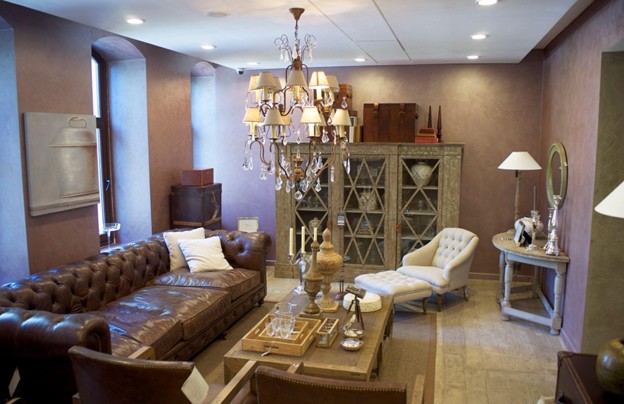
Interior design trends often move in cycles, but certain eras never truly disappear, and for Chanel Postrel, the enduring influence of the 18th century lies not in nostalgia but in its disciplined elegance and architectural intelligence. The period, characterized by symmetry, craftsmanship, and quiet opulence, persistently influences the thoughtful curation of contemporary homes.
While modern design frequently celebrates minimalism and efficiency, 18th-century interiors demonstrate that structure and ornament can coexist. The result is a layered aesthetic that feels both timeless and intentional.
At the heart of 18th-century interior design is symmetry. Rooms were composed with deliberate proportion: matching sconces, centered fireplaces, paired armchairs, and carefully scaled moldings.
This attention to balance is one reason the style continues to resonate. 'When a space feels symmetrical, it feels grounded,' she notes. 'There’s a visual rhythm that allows the eye to rest.'
Modern homeowners often interpret this principle through:
Rather than overwhelming a space, symmetry creates cohesion. Even in contemporary settings, this classical foundation provides subtle refinement.
The 18th century placed enormous value on artisan craftsmanship. Cabinetmakers, upholsterers, and woodcarvers were celebrated for intricate detail and material mastery.
For Chanel Postrel, this legacy is especially relevant today as homeowners seek authenticity in an era of mass production.
Design elements inspired by this period often include:
Even when incorporated selectively, these details introduce texture and historical weight to modern interiors.
Quality materials endure long after trends fade.
The enduring popularity of the Ralph Lauren aesthetic demonstrates how 18th-century sensibilities translate seamlessly into contemporary living. Rich wood tones, equestrian motifs, tailored upholstery, and layered textiles evoke heritage while maintaining comfort.
Chanel Postrel sees this approach as a bridge between traditional and modern. 'It’s about restraint and richness at the same time,' she explains. 'There’s depth, but it never feels chaotic.'
Key elements of this interpretation include:
This blend of sophistication and warmth allows classical influence to feel relevant rather than formal.
While antiques have long been associated with traditional interiors, their role in modern homes has evolved. Instead of filling rooms with period furniture, designers now use select pieces as focal anchors.
For Chanel Postrel, restraint is key. 'One exceptional 18th-century piece can elevate an entire room,' she says. 'It doesn’t require an entire suite.'
Common approaches include:
The contrast highlights craftsmanship without overwhelming contemporary sensibilities.
Antiques introduce narrative. They suggest continuity rather than replication.
The 18th century favored refined palettes, muted blues, sage greens, warm creams, and soft golds. These tones remain relevant for modern interiors seeking subtle depth.
Chanel Postrel notes that historical color schemes offer a foundation for layered design. 'They’re saturated enough to feel substantial but muted enough to stay livable,' she explains.
When paired with natural light and modern materials, these colors create spaces that feel grounded rather than trendy.
Timeless palettes reduce the need for constant reinvention.
Adopting 18th-century inspiration does not require recreating a historical setting. Instead, it involves extracting core principles:
Chanel Postrel emphasizes that modern homes benefit from historical structure without rigid adherence to period accuracy.
For example:
The goal is harmony, not historical reenactment.
Beyond aesthetics, 18th-century interiors evoke emotional resonance. Their emphasis on permanence and craftsmanship suggests stability. In a fast-paced world, that sense of rootedness feels especially appealing.
Chanel Postrel believes this is why traditional influences continue to return. 'People want their homes to feel lasting,' she says. 'There’s comfort in design that doesn’t feel disposable.'
Spaces informed by classical principles tend to age gracefully. Materials patinate rather than deteriorate. Proportions remain balanced regardless of trend cycles.
Longevity is a form of luxury.
In regions like Central Bucks, where historic architecture is woven into the landscape, classical interior influences feel particularly natural. Colonial homes, restored farmhouses, and traditional estates provide architectural backdrops that complement 18th-century design elements.
For homeowners in these communities, incorporating traditional details often feels less like a stylistic choice and more like architectural continuity.
Chanel Postrel notes that honoring a home’s architectural roots can enhance its character rather than obscure it.
Design works best when it respects its environment.
The influence of 18th-century interior design endures because its principles transcend trend cycles. Symmetry, craftsmanship, and thoughtful material selection remain foundational regardless of era.
Through selective adaptation and modern interpretation, these classical elements continue to shape contemporary homes. Whether expressed through a tailored aesthetic reminiscent of Ralph Lauren or through a single heirloom-quality antique, the result is a space that feels deliberate and enduring.
For Chanel Postrel, the appeal lies not in replicating the past but in learning from it. When historical intelligence informs modern creativity, interiors gain depth, warmth, and quiet sophistication. And in design, as in architecture, structure always outlasts trend.