With a major winter storm leaving vehicles buried under snow and ice across Pennsylvania, state law is clear on what drivers are expected to do before pulling back onto the road: clean the vehicle off, keep windows clear, and turn on lights when visibility drops, including when windshield wipers are running.
Snow and ice on the roof, hood, and trunk: “reasonable efforts” required
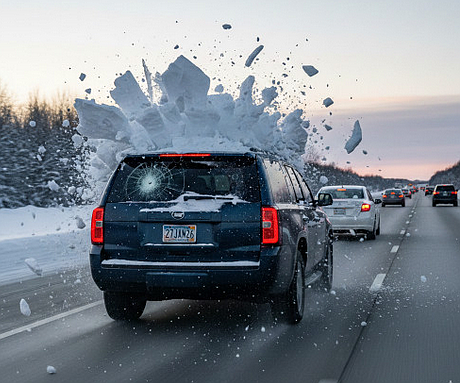
Pennsylvania’s Vehicle Code requires drivers to make “reasonable efforts” to remove accumulated snow and ice from a vehicle, including the hood, trunk, and roof, within 24 hours after snow or ice stops falling.
Police may stop a vehicle if an officer believes the accumulated snow or ice “may pose a threat to persons or property,” even if nothing has fallen off yet.
If a driver violates the snow-and-ice removal requirement, the law sets a $50 fine per offense, regardless of whether any snow or ice actually dislodges from the vehicle.
The statute also includes limited exceptions that can apply to certain larger vehicles (such as motor carrier vehicles, mass transit vehicles, buses, and school buses) in specific circumstances, including when a driver is en route to a facility to remove snow or ice, or when compliance would create a safety conflict.
Bigger penalties if snow or ice flies off and causes a serious crash
Pennsylvania law increases penalties when snow or ice dislodges from a moving vehicle and strikes another vehicle or a pedestrian, causing death or serious bodily injury. In those cases, the operator can be fined $200 to $1,500 per offense, per the law.
Pennsylvania State Police safety guidance highlights the same penalty structure and encourages drivers to clear all snow and ice, emphasizing roofs and other areas that can shed debris at speed.
Windshield, side windows, and rear window: visibility cannot be obstructed
Separate sections of the Vehicle Code make it unlawful to drive with ice or snow on the front windshield if it “materially obstructs, obscures or impairs” the driver’s clear view. The same standard applies to side and rear windows, including ice and snow that blocks visibility.
Even if a roof is technically “secure,” a driver can still be in violation if snow or ice is left on windows in a way that impairs visibility.
“Wipers on, lights on” is Pennsylvania law
Pennsylvania’s lighting statute requires drivers to use headlights not only between sunset and sunrise, but also when visibility is reduced by weather. It also specifically requires headlights any time the vehicle’s windshield wipers are in continuous or intermittent use due to precipitation or atmospheric moisture, including rain, snow, sleet, or mist.
Pennsylvania State Police summarizes the requirement plainly: “When your wipers are on, you must have headlights on.”
The message is simple for Pennsylvania drivers: A few extra minutes with a brush and scraper can prevent dangerous “ice missiles,” improve visibility, and avoid citations under Pennsylvania’s vehicle code.