As snow continues to fall across the region this winter, fire departments in Montgomery and Bucks counties are reminding residents of a simple action that can make the difference between minutes and seconds in an emergency: clear fire hydrants after a storm.
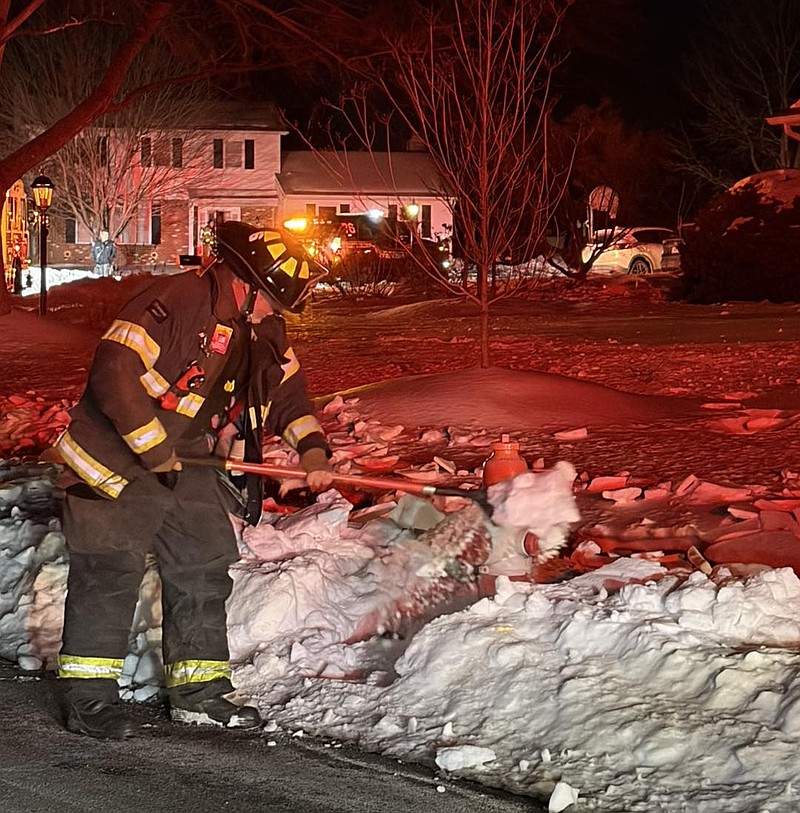
On Sunday night, Towamencin Volunteer Fire Co. alerted residents that responding to a call in snowy conditions was slowed because nearby fire hydrants were still covered in snow. Firefighters said they had to dig them out before fully setting up at the scene, adding valuable minutes to an emergency response.
“While the hydrant was not used this evening, this highlights the need for clearing them,” the department’s post said. “The time you save us could make a huge difference to you and your neighbors.”
The post urged residents to clear a three-foot radius around hydrants and maintain a clear path to the street to ensure quick access.
Fire hydrants are critical infrastructure for firefighters battling structure fires, vehicle fires, or other emergencies requiring water on short notice. Snowstorms can bury hydrants under drifts, plow berms, or ice, making them difficult to locate and even harder to use. In an emergency, every second counts, and extra time spent digging out a hidden hydrant can delay firefighters from flowing water.
Is There a Law Requiring Residents to Clear Hydrants?
In Pennsylvania, there is no single statewide law that uniformly requires residents to clear snow from fire hydrants after a storm. Many municipalities do regulate it through local ordinances, and even where it is not mandated, fire departments strongly encourage residents to do it because it saves critical time.
For Lansdale, the borough’s published Snowfall FAQ encourages residents to clear hydrants as “a good deed,” but that page does not present it as a hard requirement in the way some ordinances do.
Lansdale has also publicly asked residents to keep a three-foot clearance around hydrants during snow alerts/emergencies.
Nearby municipalities commonly post similar guidance:
Local fire companies — including the Towamencin Volunteer Fire Co. and surrounding companies — routinely post reminders after significant snowfalls urging residents to clear snow around hydrants and create a clear path from the hydrant to the street.
In some municipalities, local codes do include hydrant clearing provisions — for example, requiring that hydrants not be obstructed by snow from the roadway or berms — but the degree of enforcement varies and is typically handled at the township or borough level rather than by state statute.
Fire departments generally recommend the same simple steps after a snowfall:
These practices benefit the entire community and are not technically dangerous or illegal under local codes, provided equipment and hydrant components are not damaged in the process.
Snowstorms this year have left many hydrants buried across Lansdale, Upper Gwynedd, Lower Gwynedd, Towamencin and neighboring townships. In some cases, first responders have already had to spend precious time digging hydrants out before they could even assess a scene. This kind of delay, fire officials say, can mean the difference in a fast-moving structure fire or other life-or-death emergency.
The Towamencin fire company’s message is straightforward: clearing hydrants is not just community courtesy — it is public safety
Practical tips so you do not create a new hazard