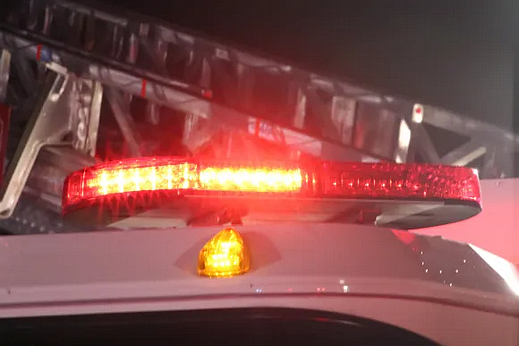
In an industry that used to have two dozen independent companies, options for buying firetrucks have dwindled as private equity firms consolidate factories and grow their profits.
Prices have outpaced inflation on fire equipment, emergency response leaders told state lawmakers on Tuesday, while noting multi-year delays make it harder and harder to replace an aging fire apparatus, a general term for emergency vehicles.
“It’s hurt us. It’s hurt every fire company in the commonwealth of Pennsylvania,” said Jim Capuzzi, the president of the volunteer Broomall Fire Company in Delaware County. “I think it’s hurt every fire company in the United States.”
A New York Times investigation last year detailed the national market conditions, where private equity firms REV Group, Oshkosh and Rosenbauer control 70-80% of production, which have left departments scrambling to replace trucks. U.S. senators held a hearing in September, sharing concerns about emergency preparedness as some fire companies deal with out-of-service engines during natural disasters.
Citing these concerns, Rep. Jennifer O’Mara (D-Delaware) held a hearing in her district Tuesday, previewing future legislation to require private equity to follow the state’s antitrust act, which allows the state’s attorney general to investigate violations. The proposal would also create penalties for not complying with notice requirements, she added.
“We have seen the impact private equity has had on our health care, and frankly, we want to do everything we can to limit the continuing crisis that we’re seeing,” O’Mara said.
The International Association of Fire Fighters has called for the Federal Trade Commission to look into the three manufacturers “for possible antitrust business practices.”
An investigation from an Atlanta-based television station concluded that national firetruck shortages are “endangering lives,” detailing an incident in Chicago where an apparatus with a ladder malfunctioned. Four people died.
“There’s a human impact on top of the disgusting economic impact on the very people that are trying to save us,” said O’Mara about the deaths in Chicago.
Fire Chief Ken Felker of the volunteer Springfield Township Fire Company, told the committee about price increases and delays acquiring vehicles for his department.
“A lot of fire companies can’t even afford to buy an apparatus,” said Felker. “One truck could financially wipe out your fire company if you don’t do it right.”
Though his company paid $1.6 million for a new tower ladder more than two years ago, the apparatus is still not expected to come off the production line until next month.
Prices continue to climb
O’Mara pointed to the closure of the Carbon County KME firetruck factory in 2022 in Nesquehoning, which impacted hundreds of workers. KME, previously the country’s largest private manufacturer, was absorbed as part of REV Group prior to its shuttering. Wisconsin-based REV Group, created by private-equity firm American Industrial Partners, now owns several firetruck brands.
In March 2015, before REV Group purchased KME, Capuzzi said it took just over a year between purchasing and receiving a new rescue truck from the Pennsylvania company.
“They delivered it in July of 2016, so it was a pretty quick bid. No price increases, no major changes. Everything went smooth. They were great to deal with,” said Capuzzi.
But when the company purchased a replacement pumper in early 2017, after the consolidation, “It was a totally different company to deal with… it was horrible.”
Capuzzi detailed several purchases in the years since, that included attempting to find a reliable contractor and struggling to the point of purchasing one vehicle used. Six months after Broomall paid a 50% deposit on a truck with another supplier, it said they could no longer deliver at that price — so the fire company voted to pay an additional $110,000 “against my better judgment.”
An $839,000 truck like Broomall’s is a big ask for small, volunteer fire companies, many of which rely on shrinking township budgets or resident fire fees to pay for vehicles alongside equipment and training.
Maintenance costs have also ticked up, with Felker saying it costs between $50,000-$100,000 a year for his multi-vehicle fleet.
“A lot of the complaints I hear about these new, multi-million dollar firetrucks is one fuse goes down and the entire truck’s down, versus these older trucks you could take apart,” said Rep. Greg Scott (D-Montgomery), a volunteer firefighter.
Capuzzi added, “When I first joined Broomall, we could fix our trucks … you can’t do that anymore.”
Recently, a broken bracket on a light took three months to replace, he said.
State-level support
The commonwealth offers apparatus loans to fire companies up to half of the total cost with 2% interest, and is currently reviewing seven applications, said J.C. Tedorski, the deputy state fire commissioner. In the last three years, prices have increased 24-53%, depending on the type of apparatus, he added.
The self-sustaining fund would need more investment from the state to dole out larger requests, Tedorski said, though getting the money for just half of an apparatus can be a struggle.
“If I go to buy a new engine for a million dollars, and I’m doing it with fundraising, and I’m making a profit of $5 a plate on a chicken dinner — that’s 200,000 chicken dinners,” said Tedorski, noting the company’s service area might only have 10,000 people.
“I haven’t put fuel in it. I haven’t done any maintenance on it. That is unsustainable for the fire service in Pennsylvania.”
Gov. Josh Shapiro’s $53.2 billion spending proposal includes $30 million for Fire Company and Emergency Medical Services Program grants, nearly double the current $37 million available. But Tedorski warned that demand could outstrip the supply, and the current program doesn’t fund major purchases like vehicles.
Other industries related to the firefighting service have also consolidated in recent years, Tedorski added, including gear manufacturers. The New York Times reported the same on the technology side, as well as emergency radios and fire retardant.
Kevin Ressler, the board secretary of the Pennsylvania Professional Fire Fighters Association, said that crunched departments increasingly devote scarce resources to equipment over personnel.
“This creates a public safety risk,” said Ressler about understaffing. “The bottom line here is that conditions and actions of fire apparatus manufacturers and their private equity overseers directly increase the risk to firefighters in the communities we serve and protect.”
When asked about specific legislative action, Ressler shared that rising costs could lead to broken-down firetrucks and unavailable services.
“I would think as a society, from a moral standpoint, we would care more about those things than making billionaire companies more wealth,” he continued. “I may be wrong in that, but that’s where I stand.”
Pennsylvania Capital-Star is part of States Newsroom, a nonprofit news network supported by grants and a coalition of donors as a 501c(3) public charity. Pennsylvania Capital-Star maintains editorial independence. Contact Editor Tim Lambert for questions: [email protected].